


- New
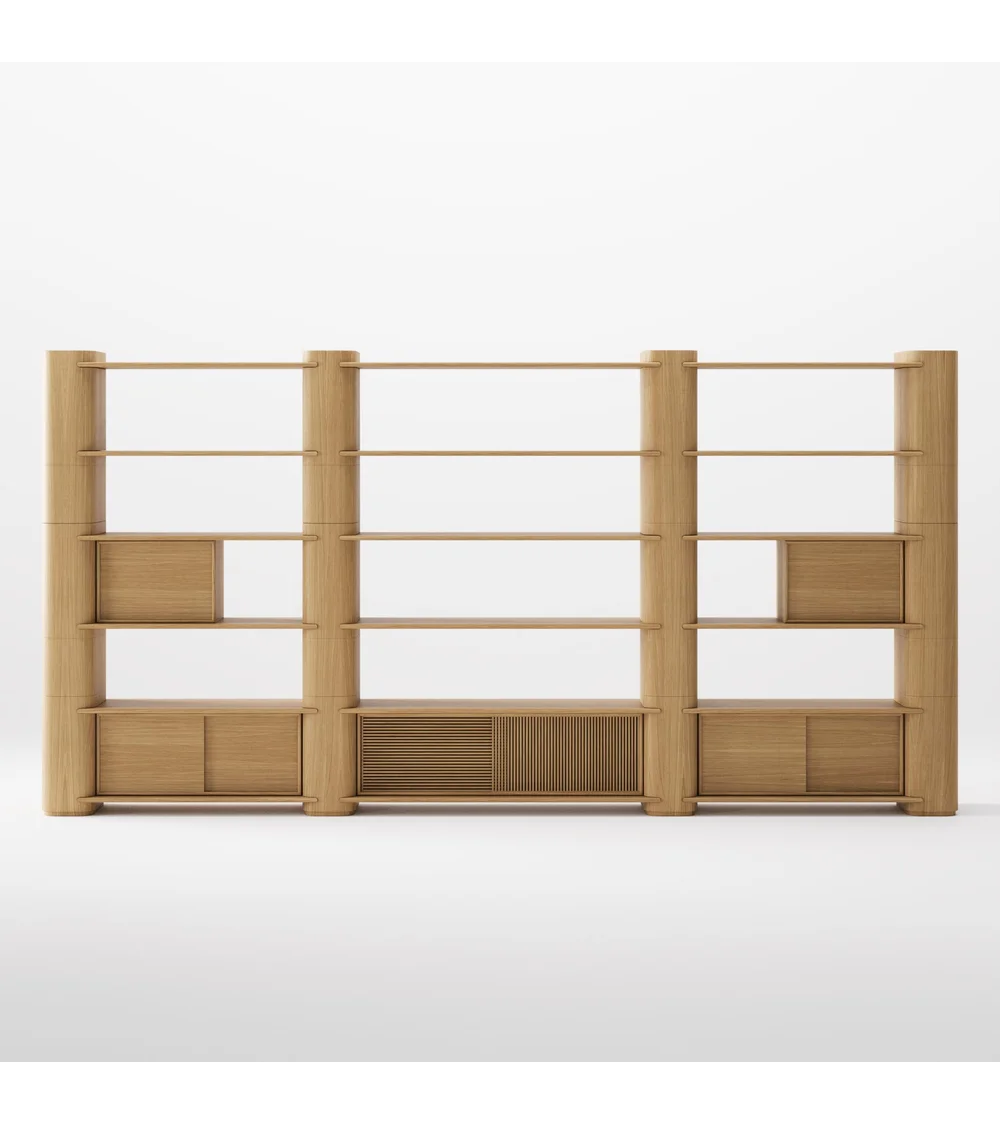
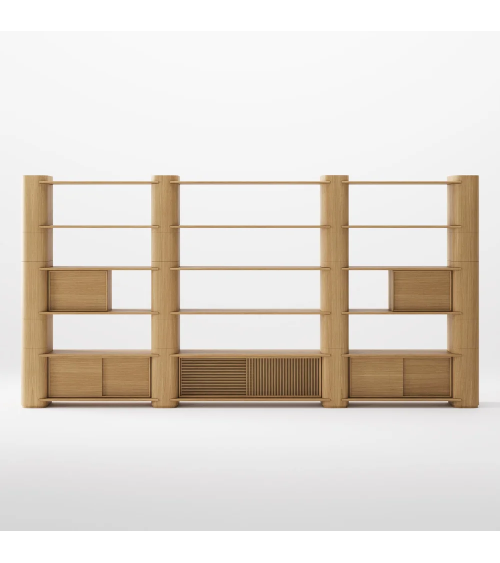
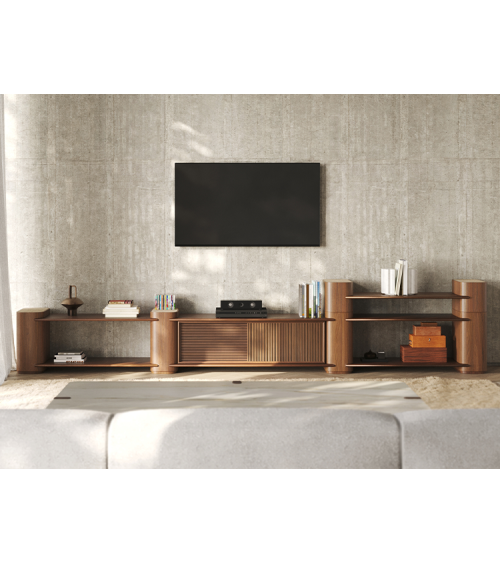
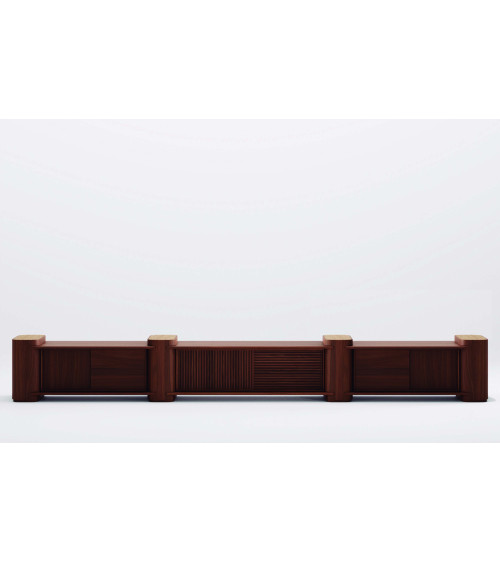
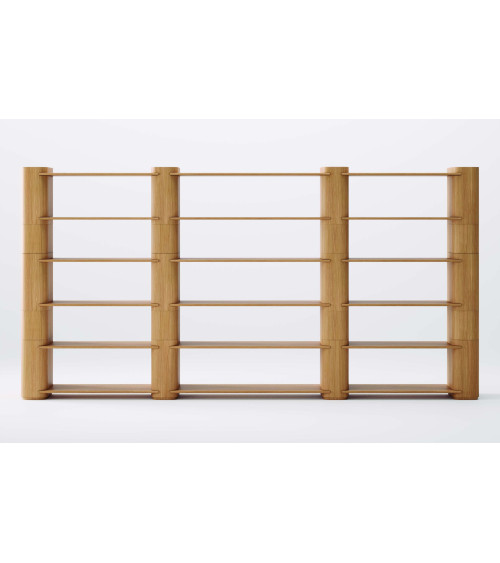
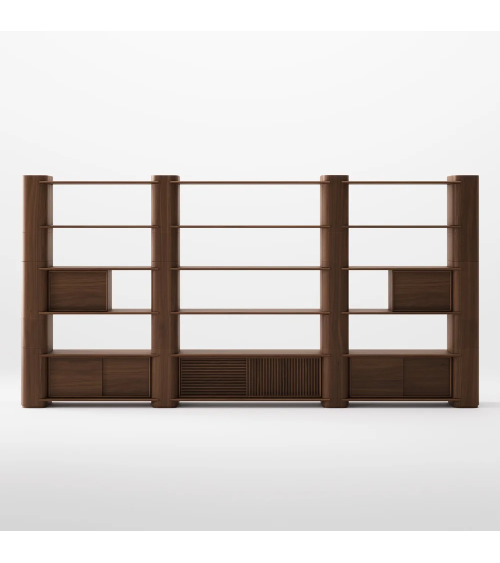
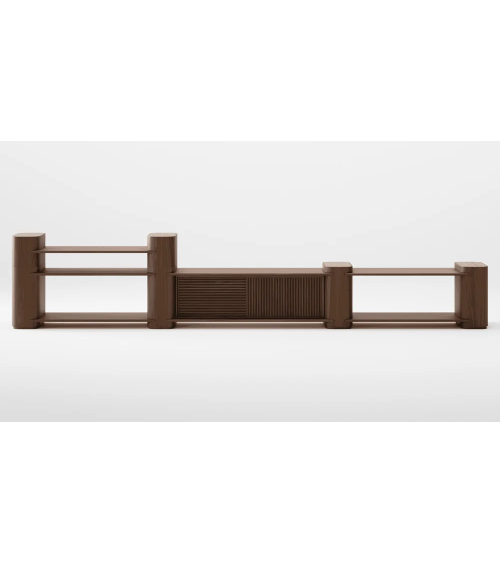
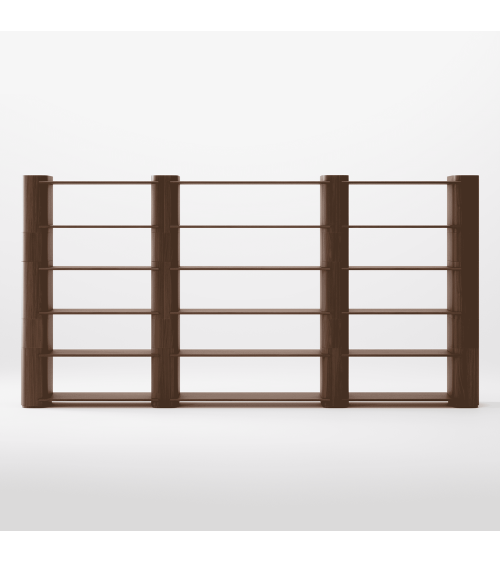
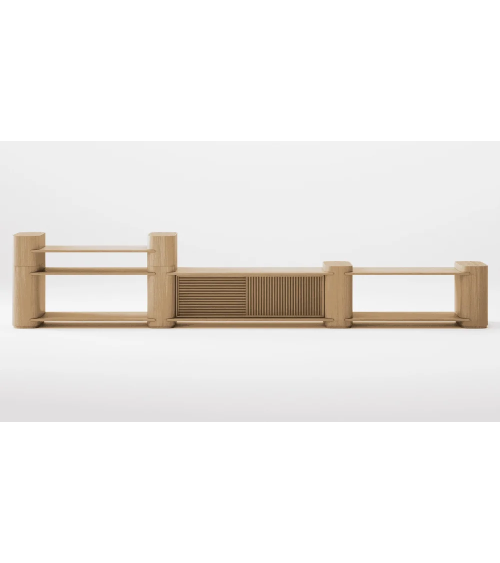
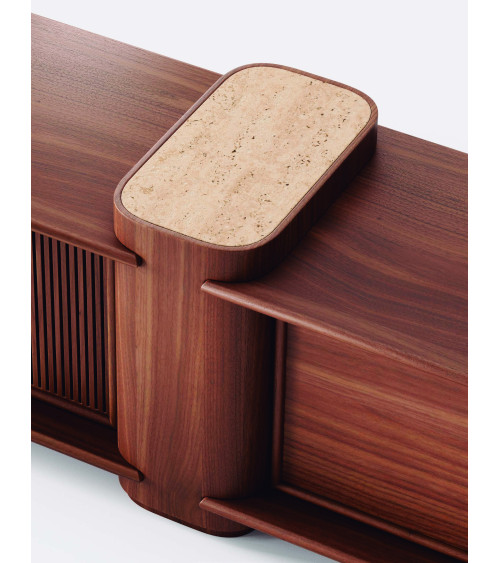
The Path modular system by WEWOOD, designed by Dan Yeffet, combines shelves, cabinets and configurable modules within an open, architectural structure. Wood is paired with refined travertine top details, while the wide variety of elements makes it possible to create bookcases, room dividers, media units and customized configurations according to the space.
For any information, configuration or available finish, please contact our customer service.
The Path modular system by WEWOOD, designed by Dan Yeffet, combines shelves, cabinets and configurable modules within an open, architectural structure. Wood is paired with refined travertine top details, while the wide variety of elements makes it possible to create bookcases, room dividers, media units and customized configurations according to the space.
For any information, configuration or available finish, please contact our customer service.
 Authorized Dealer
Official warranty
 Free Shipping
Only in Italy for orders over €599.00
 Secure payments
PayPal, Stripe, Bank Transfer
The Path modular shelving system by WEWOOD, designed by Dan Yeffet in 2025, was created to offer an extremely flexible storage solution capable of adapting to different spaces, functions and configurations.
The design combines shelves, cabinets and vertical modules according to an open and modular logic, allowing compositions to develop in different ways depending on the environment.
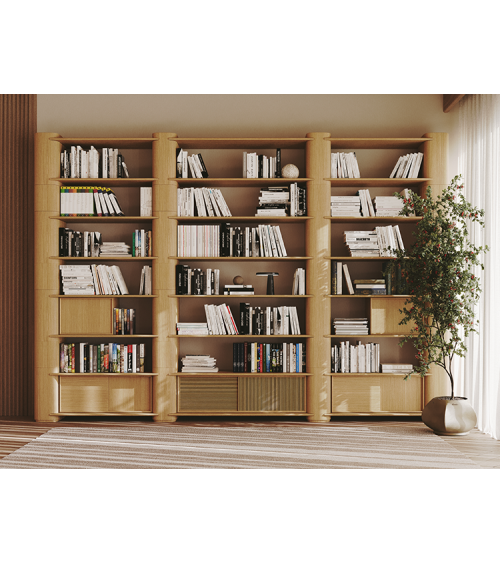
Path therefore moves beyond the traditional concept of a bookcase to become a true modular architectural system, suitable for use as shelving, a room divider or a media unit.
The concept of Path is described as a network of interconnected “islands”, independent elements that, once combined, create a coherent composition.
This structure makes it possible to freely organize solids and voids, open compartments and storage units, creating either lighter configurations or compositions with a stronger visual presence.
Its modularity also allows the system to adapt to both large open-plan spaces and more compact interiors while maintaining strong visual continuity.
One of the most interesting aspects of Path is the possibility of radically changing the function of the system through the arrangement of its different elements.
It can be used as:
This versatility makes it possible to design specific solutions for living rooms, studies or large contemporary interiors while maintaining the same aesthetic language.
Path consists of elements in different sizes that can be freely combined.
The shelves are available in two widths, while the cabinets are offered in three formats. These are complemented by vertical modules in two different heights.
The variety of elements makes it possible to alternate open surfaces and storage compartments, creating personalized compositions according to the objects to be displayed or stored.
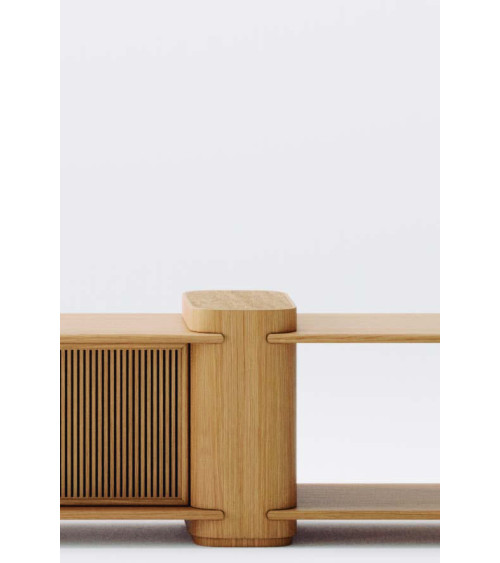
The wooden composition is enhanced by refined travertine details on the top surfaces.
The mineral texture of the stone creates a natural contrast with the wooden surfaces and introduces a more sophisticated accent within the system.
Travertine does not alter the geometric clarity of Path, but rather emphasizes its material character, bringing together two natural materials with very different visual qualities.
The name Path directly recalls the concept of movement and connection.
Like a route crossing different landscapes, the system can develop throughout the space through sequences, variations in height and connections between elements.
This idea of a path translates into a visually dynamic and open composition in which modularity makes it possible to modify the relationship between the different components.
Path thus becomes a system capable of evolving together with the interior, adapting to new needs without losing its identity.
Path can be created by combining shelves, cabinets and vertical modules in different arrangements.
The configuration can be designed to:
The official documentation shows numerous possible compositions, confirming the highly customizable nature of the system.
Path combines:
Wood forms the main structure, while travertine is used as a refined top detail, creating a contrast between wooden surfaces and natural stone.
The official images show different color interpretations of the wood, but the supplied documentation does not explicitly specify all available wood species and finishes.
For information about all available wood, travertine and configuration options, please contact our customer service.
Dan Yeffet, born in Jerusalem in 1971, has lived and worked in Paris since 2005.
After studying Industrial Design at the Bezalel Academy of Art and Design, he completed his education at the Gerrit Rietveld Academy in Amsterdam, graduating in 2002.
He later founded his own studio in Amsterdam before relocating it to Paris in 2005. Alongside his professional work, he teaches design at École Camondo.
His work spans different scales and disciplines, from furniture design and lighting to glass sculptures, objects, interiors and limited editions, combining artisanal techniques with contemporary technologies.
Path reflects this approach through an apparently simple structure capable of generating multiple configurations and spatial relationships.